Why seasickness happens
The best-supported explanation is a mismatch between the movement signals reaching the brain and the movement it expects. Below deck, your eyes may see a cabin that looks still while your balance system senses the yacht rolling, pitching and accelerating. Reading or focusing on a phone can increase that mismatch.
Another popular explanation suggests that the brain treats the mismatch like a sign of poisoning and triggers vomiting as a defence. It remains a hypothesis rather than an established account of the mechanism. For practical sailing advice, the sensory-conflict explanation gives us a useful starting point.
Medical background: CDC Yellow Book: Motion Sickness.
Who can be affected?
Some people feel well on most trips; others become uncomfortable in relatively gentle conditions. Given enough motion, almost anyone with a functioning balance system can be affected. A good experience on one voyage does not guarantee immunity, and a difficult first passage does not mean every future trip will feel the same.
Your response may vary with wave direction and shape, the yacht's heading, where you sit, fatigue and previous exposure. People with migraine or vestibular problems may be more susceptible. If you have a relevant medical history, discuss your plans with a healthcare professional before travelling.
Recognise the early signs
Symptoms often build gradually. Early signs can include yawning, unusual tiredness, loss of appetite, pallor, cold sweating, increased saliva, dizziness or a vague feeling of discomfort in the stomach. Nausea, difficulty concentrating and vomiting may follow.
Many people gradually become accustomed to the movement, often described as getting their sea legs. The speed of adaptation varies, and being used to one kind of swell does not guarantee comfort in short, steep or irregular waves. Tell the skipper early rather than waiting until you feel unable to function.
Prepare before departure
Start rested. A sleepless night makes a first passage harder. Avoid alcohol and beginning a voyage with a hangover. Nicotine may also increase susceptibility. Eat a modest meal that you tolerate well and avoid overeating or very heavy food. There is no guaranteed seasickness-prevention diet.
Begin adequately hydrated and keep drinks accessible. Pack personal essentials so that you do not need a long search below deck once the boat is moving. If you have had significant motion sickness before, ask a doctor or pharmacist about prevention in advance.
Suitable medicines generally work better when used before motion starts, with timing determined by the product and professional advice. Do not wait until severe symptoms develop to make your first plan.
What to try when symptoms begin
- If conditions permit, sit safely on deck where you can see the horizon or a distant fixed reference.
- Avoid reading, scrolling on a phone or concentrating on a screen.
- Choose a place with less movement; the middle of the yacht is often more comfortable than the bow.
- Keep unnecessary head movements small and breathe at a calm, normal rhythm.
- Seek fresh air and avoid heat, stuffiness and strong smells.
- Try a simple suitable task, such as looking out or steering under supervision, only if your condition and the skipper's assessment allow it.
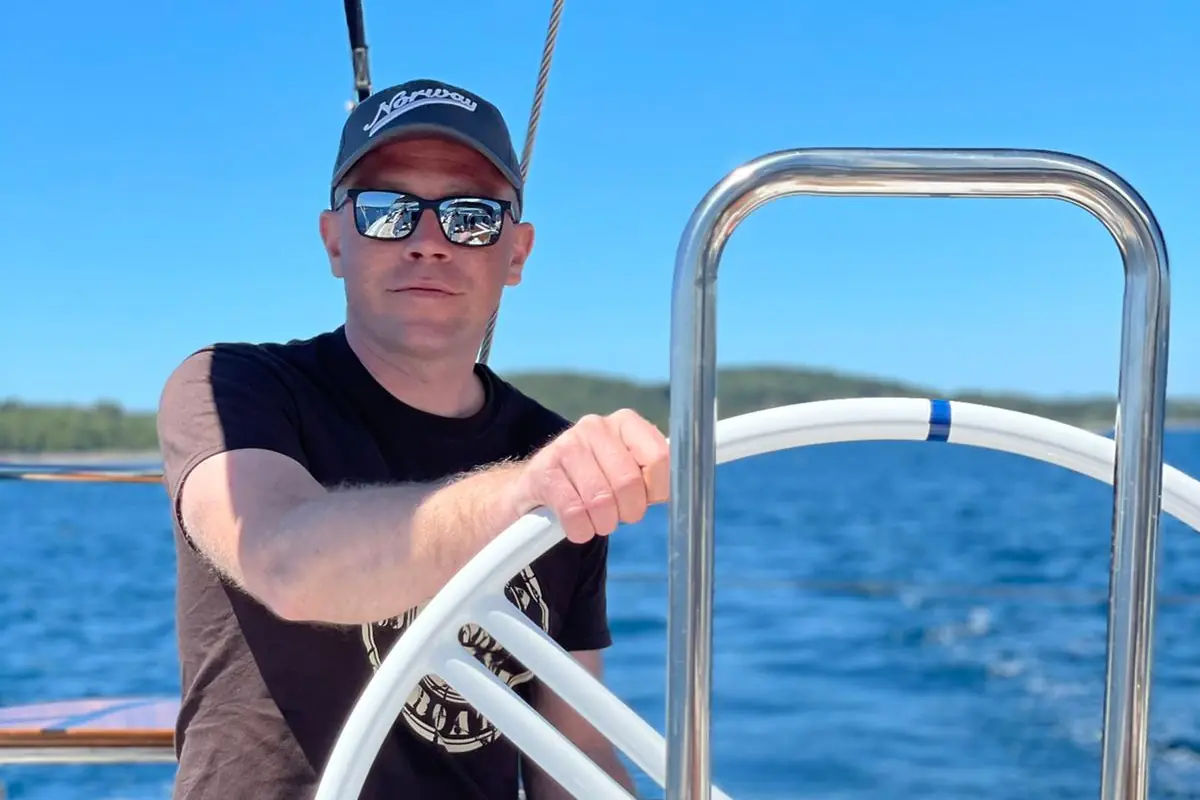
Steering can help because you can see the horizon, anticipate the waves and feel more in control. It is an option for someone who is capable of steering safely, not an obligation for someone who is very unwell.
Fresh air can improve comfort; seasickness is not simply caused by a lack of oxygen. Wear your lifejacket and use the agreed tether arrangements. Do not lean over an unprotected edge or go alone to the bow to be sick. Tell the crew so that someone can help you safely.
Sometimes rest is the best option
Lying down with your head supported, closing your eyes or sleeping may help reduce the conflicting signals. Use a secure, ventilated berth, preferably where the boat's motion is less pronounced. Sleep does not guarantee that the body stops responding to motion.
The skipper should know where you are resting and how you are feeling. A weak or dizzy person may need help moving below deck. Take small sips if you can tolerate them; repeated vomiting needs closer attention.
Medicines: choose the active ingredient and check suitability
Common options include dimenhydrinate and, in some countries, scopolamine, also known as hyoscine, in patches or other preparations. Availability, prescription status, approved ages and formulations differ between countries. A familiar brand name may refer to a different product abroad.
Motion-sickness medicines can cause drowsiness, blurred vision or reduced concentration. Tell the skipper if you use a medicine that affects alertness, and do not combine it with alcohol. Added caffeine does not guarantee that you remain fit to stand a watch or handle the boat.
Ask a doctor or pharmacist to check the product against your health conditions and other medicines. Scopolamine has important cautions, including certain forms of glaucoma and urinary-retention risk. Follow the current leaflet and any individual advice. Do not use someone else's prescription or assume an ordinary anti-nausea medicine treats motion sickness.
If advised, try the medicine in safe circumstances before the trip so that you understand your response. Once symptoms develop, oral absorption can be less reliable. Seek advice rather than repeating or combining doses yourself.
Children, pregnant or breastfeeding travellers and people with relevant medical conditions need individual advice. Do not give a child an adult preparation or cut a patch to improvise a dose. This article does not provide dosing instructions.
Ginger and wristbands
Some people feel better with ginger tea, a ginger biscuit or another preparation they tolerate. Evidence for ginger in motion sickness is inconsistent, so it should not be presented as dependable prevention.
Acupressure wristbands have not consistently performed better than placebo in controlled motion-sickness studies. If a person finds them helpful, they can be a supplementary comfort measure. They do not replace a sensible passage plan, effective prevention or attention to dehydration.
Reassurance, humour and the placebo response
Feeling supported can change how distressing symptoms feel. A placebo response does not mean that someone is pretending to be ill. Expectations, attention and a sense of control can influence the experience.
On one voyage, a friend began to feel unwell. I had small ordinary sticking plasters decorated with a dolphin, starfish and seahorse. I put one on his arm and joked that a “sea plaster” might help. His mood brightened almost immediately and, for a while, he seemed to regain his spirit.
That story does not show that a colourful plaster treats seasickness. It shows how valuable it can be to notice someone, offer care and help them feel less helpless. We can provide that support honestly: bring water, help them find a comfortable place, suggest looking at the horizon and say, “You are being looked after. Let us try what may help.” Humour and reassurance should never dismiss symptoms or delay medical help.
Can you train yourself before the trip?
Repeated exposure can help the nervous system adapt to motion, but adaptation may be specific to the conditions experienced. Balance exercises chosen at random are not a reliable promise of protection against seasickness.
If motion is a major problem for you, a clinician with experience in vestibular disorders can assess whether further investigation or an appropriate rehabilitation programme would help. For many beginners, a gentle first outing is a practical way to discover how they respond.
How I support the crew
I ask participants to report worsening symptoms early. Seasickness is a shared crew concern: someone who is dehydrated, exhausted or unable to concentrate may have difficulty moving safely and completing their duties.
On a training passage, I may shorten a watch, rotate tasks or temporarily change the watch arrangement so that a person can rest. The decision depends on their condition, the weather, crew numbers and the need to maintain a proper lookout and safe control of the yacht. They can return gradually as they improve.
If several people are unwell, the route, speed, heading or overall plan may also need to change. Someone who feels well only on deck or in a berth may be unable to cook in the galley. I may take over cooking or ask another crew member to prepare a light meal, water, tea or an appropriate rehydration drink.
Helping someone recover is part of responsible skippering. The plan must work for the people who are actually aboard that day.
Choose a first voyage that gives you room to learn
For a beginner, I recommend a short trip in suitable weather, with manageable distances and realistic shelter options. Parts of the Croatian coast can offer this, but sheltered waters still require a weather check and a flexible plan.
Your first voyage can be a calm introduction to sailing and to your own response to the boat's movement. You do not need to make it a test of endurance. We can discuss the sailing area, season and crew needs before agreeing a programme.
When to seek medical help
Repeated vomiting can lead to dehydration and electrolyte loss. Ask for medical advice if you cannot keep fluids down, are becoming very weak, pass noticeably less urine, or have symptoms that are unusual, severe or persist after the movement has stopped.
Confusion, fainting, difficulty breathing or difficulty waking someone require urgent help. Do not assume every illness at sea is seasickness. Headache, dizziness or nausea affecting people inside the cabin may also require consideration of carbon monoxide: move to fresh air safely, raise the alarm and seek help if exposure is suspected.
If you can drink, begin with small sips; a pharmacist can advise about an appropriate oral rehydration solution. Do not force fluids into someone who is unconscious or cannot swallow safely. The skipper must assess how to obtain help at the current location.
Further guidance: NHS: Dehydration.
You do not need to predict everything
No one can predict their response with certainty. Seasickness does not affect everyone on every voyage, often remains manageable, and many people find practical ways to reduce it. Preparation, early communication and a supportive crew give you a better starting point.
And the patch of green grass under a spreading oak? According to an old sailing joke, it is the surest cure - mainly because it means you are back on land.
Quick checklist
Use this short reminder alongside the full guide. Adapt it to the yacht, sailing area and crew.
Sources and further reading
- Polish original — opens in a new tab
- CDC Yellow Book 2026: Motion Sickness — opens in a new tab
- NHS: Motion sickness — opens in a new tab
- NHS: Dehydration — opens in a new tab
- GOV.UK: fire safety, ventilation and carbon monoxide on boats — opens in a new tab
Sources checked 11 October 2026.