Safety begins before the lines are slipped
A safety briefing is sometimes rushed as a list of information to deliver before leaving the berth. Done properly, it helps turn an unfamiliar collection of lockers, switches, valves and ropes into a boat that the crew understands.
I want people to feel able to ask questions and report a concern immediately. Knowing where your lifejacket is, how to stop the engine and how to call for help gives you a practical role in the crew.
Many problems begin with ordinary tasks: a badly fitted lifejacket, a rope left in the water, incorrect use of the cooker or an open valve. Explain safe movement on deck, the heads, gas, electrical panels, the anchor and windlass, the engine controls and the escape routes.
Explain, demonstrate and let the crew practise
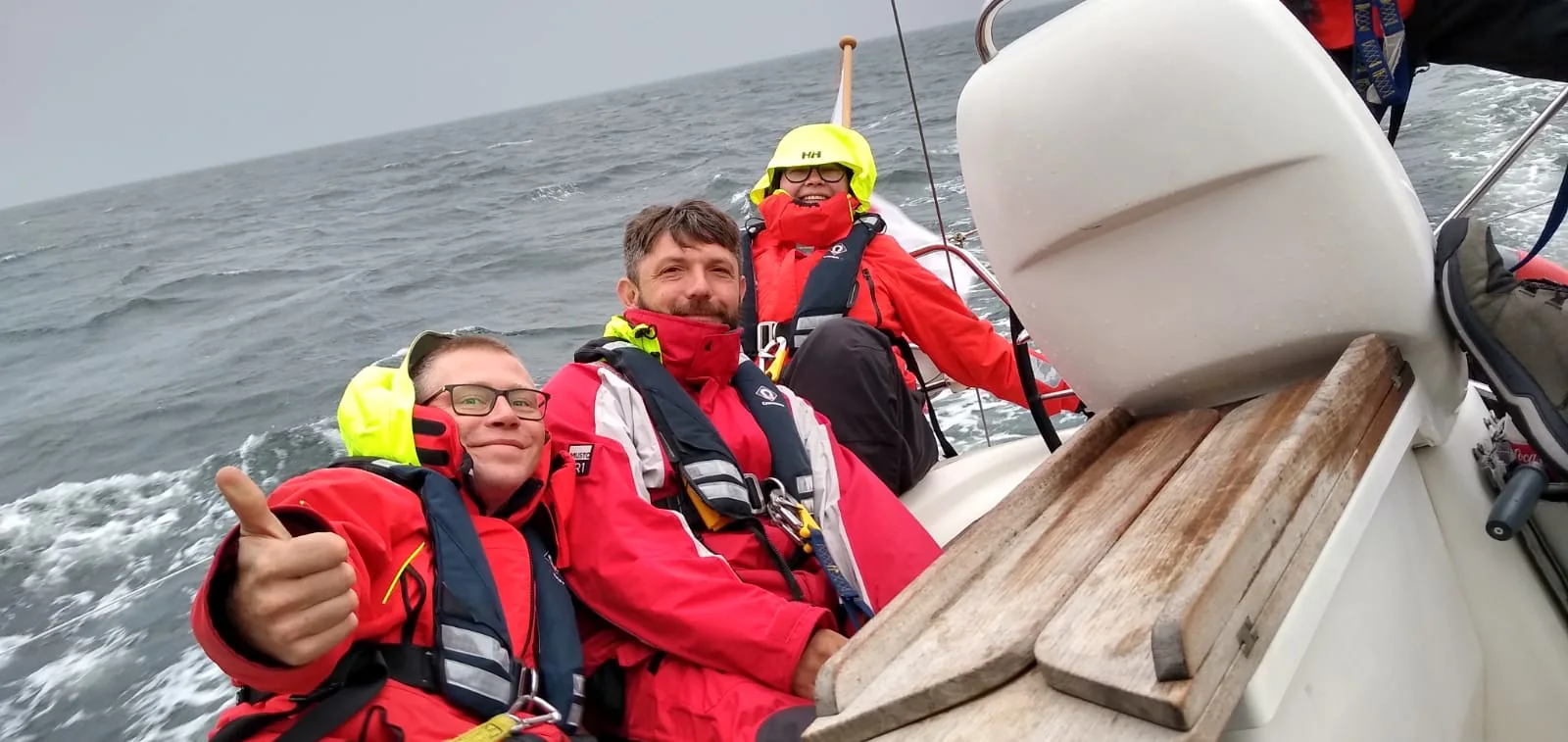
Pointing at a locker and saying “the lifejackets are in there” is only the first step. Each person should receive a suitable lifejacket, put it on over their sailing clothing, adjust it according to the manufacturer's instructions and know where it will be kept. Show the manual inflation handle, whistle, light, sprayhood and oral inflation tube where fitted.
Agree when lifejackets and safety tethers will be worn. Wearing suitable personal safety equipment is part of the plan to stay on board and remain afloat if an accident occurs.
Use clear terms: the harness is worn by the person; the safety tether connects the harness to an approved strong point or jackstay. Jackstays, also called jacklines, are the purpose-made lines or webbing along the deck. They are different from the guardrails and from the tether itself.
Physically identify the approved attachment points and let each person practise clipping on under supervision. Do not clip to a guardrail or an arbitrary fitting. Explain safe routes on deck, the boom and other moving equipment, and when to clip on before leaving the cockpit.
Prepare for the skipper being unable to act
The skipper should not be the only person who can start the engine, operate the radio or turn off the gas. An accident can affect the skipper too. Nominate a person to coordinate the crew if that happens and agree simple emergency roles.
Let crew members practise starting and stopping the engine and using neutral, ahead and astern under supervision. Check cooling-water discharge where applicable. Choose a safe place and method: nobody should be near the propeller, ropes must be clear and the exercise must not cause uncontrolled movement of the boat.
Everyone should know how to read the position from the GPS or chartplotter and how to make a distress voice call on VHF channel 16. Show the DSC DISTRESS cover and explain the procedure for that radio without pressing the live distress button. A real emergency must not be delayed while waiting for one particular person to reach the radio.
Also practise simple physical tasks, such as using the manual bilge pump, preparing a throwing line and finding or lowering the boarding ladder. Show controls without activating equipment where activation would be unsafe.
What the briefing should cover
Use the actual yacht and its manuals. Similar-looking boats may have different installations, emergency steering arrangements and operating procedures.
- Lifejackets, harnesses, safety tethers, jackstays and safe movement.
- Person-overboard actions, lifebuoy, throwing line, marking the position and recovering a weak or unconscious person.
- Engine controls, safe propeller management, boarding ladder and bathing platform.
- Fire extinguishers, fire blanket, escape routes, and gas, fuel and electrical isolation.
- Seacocks, leak-stopping equipment, manual and electric bilge pumps.
- Switches, fuses and circuit breakers for essential systems.
- Emergency tiller, access and tools; the actual type of autopilot and any approved alternative steering method.
- Anchor and windlass, commands, securing the anchor and the model's emergency operation.
- VHF, DSC, EPIRB if carried, signal equipment and the grab bag.
- Liferaft location, preparation and the circumstances that could require abandoning the yacht.
Do not assume the autopilot will solve a steering failure. A drive attached directly to the rudder quadrant or a separate rudder-stock arm may bypass failed wheel cables, but only if the remaining steering components, drive and power supply are intact. Check the installation before relying on it.
Show emergency equipment and rehearse the sequence dry. Do not fire flares, launch a smoke signal, inflate the liferaft or transmit a live DSC or EPIRB distress alert as an ordinary crew exercise. Use only manufacturer-approved test modes where appropriate.
Fire and flooding: know the locations and the priorities
Identify the nearest extinguisher and exits from each sleeping area. Demonstrate the fire blanket and the correct isolation points. Only tackle a fire if you have suitable equipment, a clear escape route and can do so safely. Never put water on burning cooking oil or carry a burning pan. Avoid opening an engine compartment and feeding air to a fire.
If you smell gas, raise the alarm, avoid flames and electrical switching, isolate the supply if safe and ventilate as instructed. Show smoke, gas and carbon-monoxide alarms where fitted, and keep ventilation clear.
For flooding, locate seacocks, suitable plugs, pump handles, switches and fuses. Raise the alarm, find and control the ingress if possible and monitor the water level while pumping. Call for help early if the situation is not controlled. Consider which electrical circuits are essential before isolating power: pumps and radio may still be needed.
The liferaft is a last resort
Heavy weather or a single equipment failure does not automatically mean abandoning the yacht. Prepare early, but move to the liferaft when staying aboard becomes more dangerous, such as an uncontrollable fire, unavoidable sinking or serious structural failure.
Show where the raft is, how its securing arrangements are released, what the painter does and where the grab bag is kept. Explain deployment using the instructions for that model. The painter must be secured to a suitable strong point before a manual launch as instructed; consider fire, fuel, rigging, wind and waves when choosing the launch position.
Take the EPIRB, handheld VHF, first-aid supplies, water and signalling equipment if doing so does not delay escape or endanger anyone. Count people and help those who need assistance. Do not let attachment to the yacht drag the raft into danger.
The briefing continues during the voyage
Beginners cannot learn every emergency procedure in one short talk. Before departure, give them an understandable plan, demonstrate the key equipment and check that they can perform the essential actions. Build on this at the first anchoring manoeuvre, sail change, harbour entry and watch handover.
Calm preparation usually reassures people. The aim is a crew that understands the yacht, notices problems and can support one another. That is how I approach practical sailing instruction: explain the task, let people act under suitable supervision and discuss what they learned.
The six-page checklist separates discussed, demonstrated and practised, with space for the yacht's details, equipment locations and a crew record. Mark an item N/A where it does not apply; do not activate equipment merely to fill a box.
Quick checklist
Use this short reminder alongside the full guide. Adapt it to the yacht, sailing area and crew.
Sources and further reading
- Polish original — opens in a new tab
- RNLI: yacht safety and crew emergency planning — opens in a new tab
- GOV.UK: fire safety on boats — opens in a new tab
- RYA: liferaft — opens in a new tab
- RYA: sailing grab bags — opens in a new tab
Sources checked 11 October 2026.