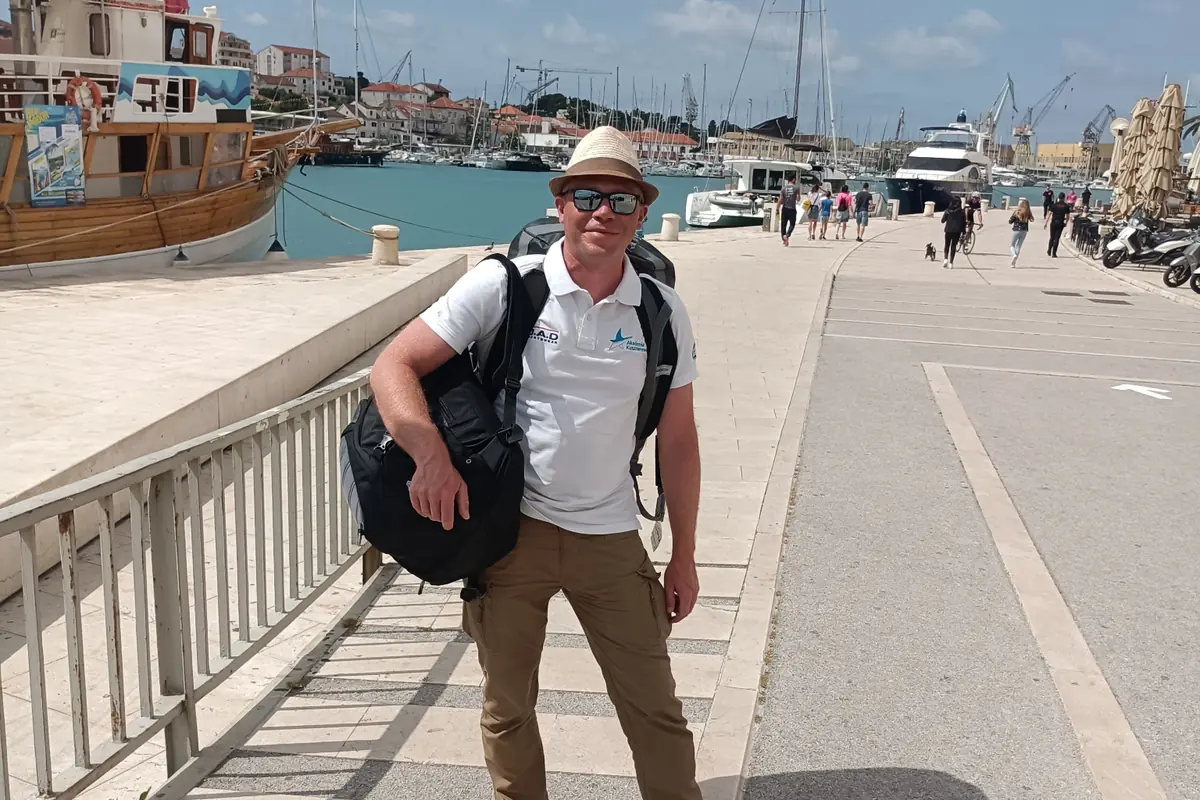
Start with the boat and the voyage
This list is a starting point for a recreational sailing holiday or a practical training voyage. Before you pack, ask what the yacht owner or charter company provides and what the skipper recommends for your particular trip. A week along the Croatian coast in summer and an autumn passage across the Baltic call for different clothing.
You do not need to buy an expensive set of specialist equipment for every first trip. Check the essentials, confirm what is supplied and choose items that you can use comfortably on board.
Rain, wind and colder evenings
Bring a waterproof jacket with a hood, waterproof trousers, a fleece or warm mid-layer, a sun hat and a warm hat that covers your ears. Even a summer Mediterranean trip can include a windy night or a cool evening on deck.
For the Baltic, North Sea, Norway or sailing outside the warmest months, add thermal base layers, warmer mid-layers and spare socks. For longer exposed passages, ask whether ordinary outdoor waterproofs will be enough or whether you need more protective sailing clothing. Pack spare dry clothing in a waterproof bag.
Several layers give you more flexibility than one bulky garment. Make sure your outer clothing allows you to move, crouch and wear a properly fitted lifejacket.
Sun protection
Bring sunglasses, preferably with a retaining strap, sunscreen with a high protection factor, a sun hat and clothing that covers exposed skin. Apply and renew sunscreen according to its instructions. Reflections from the water and a cooling breeze can make it easy to underestimate exposure.
For warm-water sailing, two swimming costumes can be useful: one can dry while you use the other. Keep drinking water within reach.
Shoes for the yacht and time ashore
Your main deck shoes should have flat, grippy, non-marking soles and stay securely on your feet. A light-coloured sole is often a useful choice, but check that it is actually non-marking. Closed shoes help protect your toes around deck fittings.
- A second pair is useful if the first gets wet.
- Bring shower sandals for marina facilities.
- Water shoes may be useful around rocky Mediterranean shores, but they do not guarantee protection from sea-urchin spines. Choose your entry point carefully and avoid standing where you cannot see the bottom.
For colder passages, waterproof footwear or lightweight sailing boots with a grippy sole may be more useful than swimming shoes. Check that your boots remain comfortable with warm socks.
Lifejackets: confirm the right fit before travelling
Lifejackets are normally part of the yacht's equipment, so you will not usually need to bring your own. Ask what type is provided, whether it is suitable for regular wear on deck and whether the sizes suit everyone in your crew. Inflatable lifejackets and foam lifejackets differ in fit, comfort and operation.
If children are coming, confirm suitable lifejackets for their weight and size well in advance. An adult lifejacket is not an acceptable substitute for a correctly fitted child's lifejacket. Tell the skipper if anyone cannot swim or feels unsure on the water.
Equipment and carriage requirements vary with the vessel, flag, cruising area and operator. During the safety briefing, each person should put on and adjust their own lifejacket and learn how that model works. If you intend to fly with an inflatable lifejacket, check the airline's current rules for its gas cylinder and spare cylinders before booking baggage.
Sleeping, washing and everyday comfort
Check whether bed linen and towels are included. Depending on the arrangements, bring a sleeping bag, a quick-drying bath towel, a separate beach towel and basic toiletries. Transfer liquids into smaller, securely closing containers.
Marina showers and toilets are useful, but facilities and opening hours vary. On board, fresh water and storage space are shared resources; follow the skipper's guidance on showering and water use.
Choose a soft bag
A soft travel bag or a foldable backpack is usually the easiest luggage to store after unpacking. A large rigid suitcase can occupy an awkward amount of cabin space throughout the voyage.
A small daypack is useful for sightseeing, shopping and going ashore. Keep documents, medicine and a change of clothing protected from water. If you travel to the boat by car or minibus, ask whether empty bags can be left safely in the vehicle.
Lighting, charging and electronics
A head torch leaves both hands free. A red-light setting can help preserve night vision, provided you keep the light dim and avoid shining it towards the helm or other crew members.
- Bring a phone charger and the correct cable.
- A charged power bank is useful away from shore power.
- A waterproof phone pouch helps protect your device.
- Check the yacht's sockets and bring an appropriate travel adaptor if necessary.
On many European charter yachts, 230 V sockets work only when the yacht is connected to shore power in a marina. Some boats have an inverter or generator; some provide USB or 12 V charging. Confirm the actual arrangements rather than assuming that mains power will be available at sea. Use equipment as instructed and avoid overloading sockets.
Medicines and personal health needs
If you take regular medicine, bring enough for the whole journey, ideally in its original packaging, with any prescription or supporting paperwork required for travel. Check destination and transit-country rules for restricted medicines.
A small personal first-aid kit can hold dressings and familiar remedies that are suitable for you. Discuss the choice of medicines with a doctor or pharmacist; avoid trying an unfamiliar medicine for the first time during a demanding passage.
The boat's first-aid kit and proper crew preparation remain important. I also carry some of my own familiar supplies. Tell the skipper about relevant allergies, health conditions or mobility needs in a private conversation before departure. If you are concerned about nausea, read the seasickness guide and seek advice about prevention before travelling.
Documents, insurance and payment
Check entry requirements for every country on the route and any transit countries. Depending on your nationality and itinerary, you may need a passport, a national identity card, a visa or other supporting documents. Carry any sailing qualifications required for your role.
Bring your insurance details, emergency contact information, a payment card and some cash. If you are eligible for an EHIC, GHIC or another reciprocal healthcare scheme, check where it applies and what it covers. It does not replace suitable travel insurance. Confirm that your policy covers the sailing you plan to do, any relevant offshore limits, medical treatment, evacuation and repatriation.
Useful extras and the final check
Sailing gloves can help during frequent rope work, especially on an intensive training voyage. They are optional for many leisure trips. Keep loose clothing and fingers clear of moving rope and winches; gloves do not remove those hazards.
Before closing your bag, confirm the expected conditions, bedding and towel arrangements, sleeping-bag requirements, lifejacket sizes, charging options and any baggage limits. Well-chosen items make the voyage easier without filling the cabin with things you will never use.
Quick checklist
Use this short reminder alongside the full guide. Adapt it to the yacht, sailing area and crew.
Sources and further reading
Sources checked 11 October 2026.